







Integrated Engineering: The Ultimate Guide to VW & Audi Performance Tuning
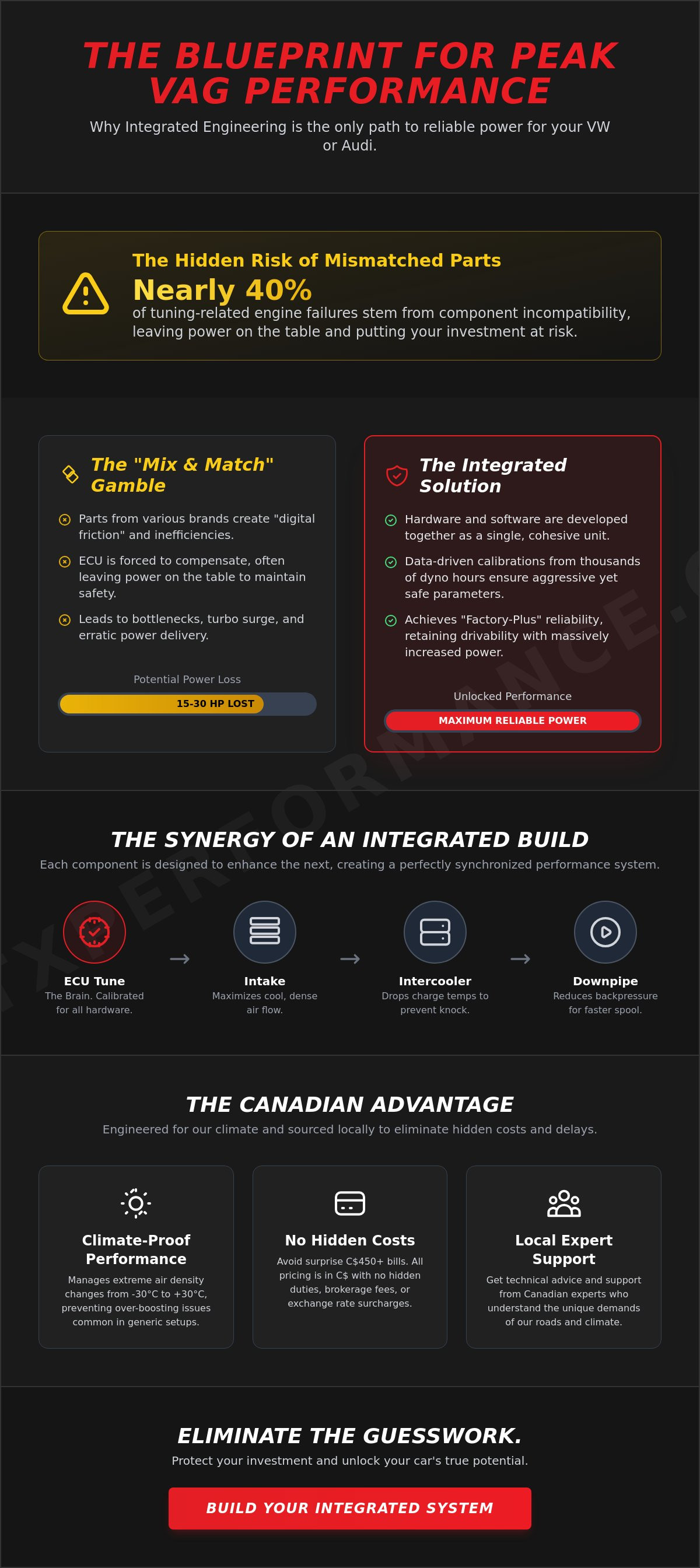
Most enthusiasts believe mixing the "best" individual parts creates the ultimate build, yet industry data suggests that nearly 40% of tuning-related engine failures stem from component incompatibility. True performance requires integrated engineering, where every software map is calibrated specifically for the hardware it controls. You've likely felt the frustration of deciphering vague "Stage" requirements or faced a C$450 surprise bill for cross-border shipping and duties when ordering from the US.
We agree that your VW or Audi deserves a level of precision that off-the-shelf, mismatched parts can't provide. This guide will show you how to build a reliable, high-performance machine using a roadmap that eliminates guesswork and protects your investment. You'll gain a clear understanding of the technical synergy between IE hardware and software, while discovering how to source these elite components directly in Canada to keep your project on track and under budget.
Key Takeaways
- Understand how the integrated engineering methodology synchronizes hardware and software to deliver unparalleled reliability and power for your VW or Audi.
- Learn to identify and eliminate restrictive factory weak points by upgrading to components that exceed original OEM specifications.
- Discover the essential tiered approach to performance tuning, from foundational maintenance to high-output hardware configurations.
- Optimize your engine's management system by mastering the relationship between the ECU and high-performance bolt-on components.
- Avoid hidden duties and exchange rate surcharges by sourcing performance parts locally in Canada with technical support and pricing in C$.
What is Integrated Engineering in the Automotive World?
Integrated engineering is a specialized methodology where hardware components and software calibrations are developed simultaneously as a single, cohesive unit. Unlike the traditional aftermarket approach where parts are sourced from various manufacturers, this strategy ensures that every bolt, flange, and line of code works in total harmony. Since its inception in 2007, the IE brand has transitioned from a boutique manufacturer of high-strength connecting rods to the primary authority for Volkswagen and Audi (VAG) performance in North America. Their reputation within the enthusiast community is built on eliminating the "digital friction" that occurs when mismatched parts fight against the factory ECU logic.
The distinction between an integrated build and the "Mix-and-Match" method is stark. Most tuners rely on a Frankenstein approach, combining an intake from one brand with software from another. This often forces the ECU to compensate for hardware inefficiencies, frequently leaving 15 to 30 horsepower on the table to maintain a safety margin. By contrast, an integrated solution utilizes parts designed on the same dyno where the software was written. This allows for tighter tolerances and more aggressive, yet safe, performance parameters. As we approach 2026, vehicle technology has reached a level of complexity where mechanical components are no longer just "parts"; they are sensors and actuators in a high-speed digital network. A 2% variance in airflow velocity on a modern EA888 Gen 3 motor can trigger immediate torque intervention, making precision engineering a requirement rather than a luxury.
The Philosophy of System Synergy
Performance is defined by the weakest link in the chain. A software tune is fundamentally limited by the physical flow capacity of the intake and exhaust. Conversely, high-flow hardware is useless if the ECU isn't programmed to utilize the increased volume. This "bottleneck effect" is the primary cause of turbo surge and erratic power delivery in non-integrated builds. By applying foundational engine tuning principles to the physical design of the parts, IE achieves "factory-plus" reliability. This means the car retains its original drivability and cold-start manners while delivering power levels that far exceed stock configurations. Every component is stress-tested to ensure it can handle the specific thermal loads generated by the corresponding software stage.
Why VAG Owners Prioritize Integrated Solutions
In the Canadian market, owners of MQB platform vehicles like the Golf R or Audi S3, as well as 3.0T powered S4 and S5 models, face unique challenges. Our climate shifts from -30°C to +30°C, demanding hardware that can manage massive air density changes. Integrated solutions are essential here because they match intake velocity precisely with ECU map requests, preventing the over-boosting issues common in generic setups. For the discerning driver, integrated engineering is the synchronization of mechanical flow and digital logic to maximize power without compromising safety. This precision ensures that whether you're merging onto the 401 or hitting a track day at Mosport, your engine operates within its optimal thermal and mechanical window.
- Direct Fitment: No modification required to factory mounting points.
- Data-Driven: Thousands of hours of data logging behind every Stage 1 and Stage 2 file.
- Scalability: Hardware that grows with your power goals, from simple intakes to full turbo upgrades.
The Technical Core: Synchronizing Hardware and Software
Performance tuning isn't just about adding parts; it's about making them communicate. Integrated engineering builds their systems so the ECU manages high-flow components as a single unit. This approach aligns with modern automotive engineering standards, ensuring that software calibrations account for physical airflow changes. IE validates every setup through thousands of data logging hours and rigorous dyno testing. This data-driven process creates "Safety Maps" that monitor oil temperatures and air-fuel ratios, protecting your engine if parameters deviate from safe limits.
- ECU: The brain that translates sensor data into boost and timing.
- Intake: Maximizes oxygen density for the combustion chamber.
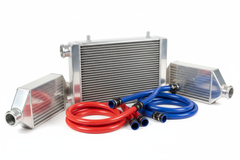
- Intercooler: Drops charge air temperatures to maintain power.
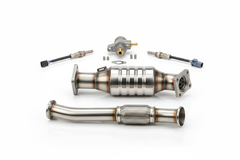
- Downpipe: Reduces exhaust backpressure for faster turbo spool.
ECU Tuning: The Brain of the Build
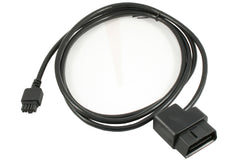
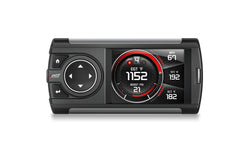
Stage 1 tuning provides a massive boost on stock hardware, while Stage 2 requires a high-flow downpipe to manage exhaust heat. While some enthusiasts prefer the handheld interface of the Cobb Tuning V3 Accessport, IE utilizes their proprietary POWERlink system. This tool allows Canadian drivers to flash their ECU or TCU directly from a laptop in their own garage. It's professional-grade calibration without the trip to a shop. These tunes are optimized for 91 and 93 octane fuels available across Canada, ensuring reliability from coast to coast.
High-Flow Hardware: Beyond the Aesthetics
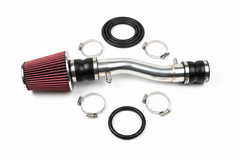
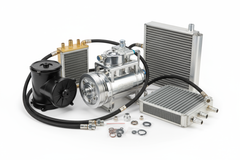
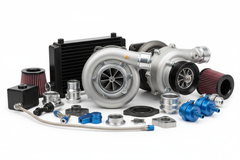
Hardware aesthetics are secondary to function. An IE cold air intake uses velocity stacks to accelerate airflow into the turbocharger, reducing turbulence. In Canada, fluctuating temperatures make a performance radiator and intercooler essential. These components combat "heat soak," a condition where the intake air becomes too hot, forcing the ECU to pull timing and kill power. Upgraded cooling ensures consistent 300+ HP pulls during a humid Ontario summer or a spirited drive through the Rockies. Integrated engineering ensures every bolt-on works in harmony with the software. You can find the right hardware for your specific model at mtxperformance.ca to begin your build.
Engineering Standards: Solving OEM Weak Points
VW and Audi engines represent the pinnacle of German mass-market design, but they aren't without flaws. Factory cost-cutting often leads to plastic water pump housings that warp and restrictive intake manifolds that limit airflow at high RPMs. Integrated engineering addresses these weaknesses by replacing vulnerable components with billet aluminum and high-flow composites. IE engineers use 3D laser scanning to capture engine bay geometry with sub-millimeter accuracy. This ensures that every part integrates seamlessly with existing hardware. Before any hardware is produced, it undergoes extensive CFD (Computational Fluid Dynamics) analysis to optimize flow paths. This technical rigor is essential because performance tuning is about more than just adding boost; it's about managing the physical stresses of increased output. Forged IE connecting rods, for example, are engineered to handle the cylinder pressures of a 600 HP build, far exceeding the 350 HP threshold where stock rods often fail.
From Prototyping to the Pavement
IE doesn't guess; they validate. Parts move from digital prototypes to 3D-printed mockups before the final manufacturing phase. Torture testing involves hundreds of hours on the chassis dyno and real-world track sessions in extreme heat. Proper pressure management is vital for turbo longevity. High-boost applications often benefit from integrating HKS Super SQV4 blow off valves to prevent compressor surge. This combination of integrated engineering hardware and proven peripheral components creates a bulletproof forced induction system that survives the transition from the lab to the street.
Reliability as a Performance Metric
Chasing a single peak horsepower number is a mistake. Real-world speed comes from the area under the curve, providing usable torque across the entire rev range. IE software and hardware work in tandem to preserve factory-level drivability. Your car will start reliably in a Canadian winter and maintain smooth idling in heavy traffic. This long-term build philosophy saves money. You avoid the cycle of replacing cheap parts that fail under pressure. Choosing IE means you're investing in a solution that respects the vehicle's longevity while unlocking its hidden potential. It's a buy once, tune right mindset that defines the elite tier of the VAG tuning community.
- 3D Scanning: Eliminates fitment issues before production begins.
- CFD Optimization: Maximizes airflow efficiency in manifolds and intakes.
- Forged Durability: Supports high-output builds that would shatter OEM internals.
- Drivability: Maintains smooth power delivery for daily commuting.
Planning Your Build: A Tiered Approach to Power
Building a high-performance VW or Audi requires a calculated roadmap. Throwing parts at a vehicle without a strategy leads to mechanical failure and wasted capital. At MTX Performance, we follow a rigorous five step process to ensure every build achieves maximum output with OEM plus reliability.
- Step 1: The Foundation. Never tune a broken car. Perform a full health check including carbon cleaning, spark plug inspection, and a boost leak test. A healthy baseline is non-negotiable.
- Step 2: The Entry Point. Software is your primary gateway. An integrated engineering Stage 1 tune optimizes timing and boost levels for immediate gains on a stock engine.
- Step 3: Heat Management. Power generates heat. Upgrading your intercooler and intake system ensures consistent performance during back to back pulls on Canadian backroads.
- Step 4: Flow Optimization. Transitioning to Stage 2 requires removing exhaust restrictions. This is where hardware becomes the bottleneck.
- Step 5: The Support System. Once torque levels climb, you must address the drivetrain. Suspension bushings, engine mounts, and limited slip differentials keep the car planted.
Stage 1 vs. Stage 2: What You Actually Need
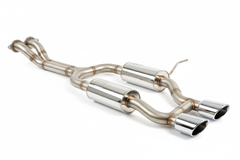
Stage 1 is the sweet spot for daily drivers. It delivers a 20% to 30% increase in horsepower using integrated engineering software with minimal hardware requirements. It's refined, reliable, and retains factory like drivability. Stage 2 is a different animal. It's designed for enthusiasts seeking track ready performance. This level demands a high flow performance exhaust to reduce backpressure. Without this hardware, EGTs (Exhaust Gas Temperatures) rise too high, forcing the ECU to pull timing and kill your power gains.
Essential Supporting Modifications
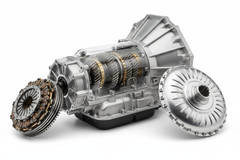
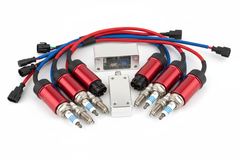
Drivetrain management is often overlooked. If you're running a DSG transmission, a TCU tune is mandatory to increase clutch clamping pressure. Without it, your clutches will slip under the increased torque of a Stage 2 file. Ignition is equally critical. We recommend moving to a spark plug one heat range colder than stock to prevent pre-ignition. For those pushing toward Stage 3 or big turbo setups, fueling becomes the final frontier. Upgraded High-Pressure Fuel Pumps (HPFP) and larger injectors are required to maintain the 12.0:1 air-fuel ratios necessary for high boost safety.
Ready to transform your driving experience with precision engineering? Consult with the experts at MTX Performance today.
The Canadian Advantage: Sourcing IE Parts Nationally
Ordering high-performance components from the United States often looks attractive on paper until the reality of the border hits your wallet. Between fluctuating exchange rates and unpredictable customs processing, the final cost of your build can spiral out of control. Sourcing your integrated engineering hardware directly from a Canadian specialist like MTX Performance removes these financial variables. We focus on providing a streamlined acquisition process that keeps your project on budget and on schedule.
Avoiding the Cross-Border Headache
Purchasing your performance components within Canada saves enthusiasts an average of 20% to 30% in surprise fees such as import duties and carrier brokerage charges. These hidden costs often appear as an unexpected invoice upon delivery, turning a perceived bargain into an expensive mistake. By choosing a domestic supplier, you eliminate the stress of international logistics.
- Immediate Dispatch: MTX Performance maintains a dedicated inventory of IE parts in-house, ensuring your order doesn't sit in a customs warehouse for weeks.
- Simplified Warranty: If a component requires a warranty claim or return, you deal with us directly. You won't have to navigate international shipping regulations or pay to send heavy metal parts back across the border.
- Price Transparency: The price you see is in CAD, protecting you from the volatility of the currency market.
Expert Advice for Canadian Builds
Canada’s environment demands a specific approach to tuning that generic guides often overlook. Our team understands that a stage 2 Audi in Vancouver faces different challenges than one in Montreal or Calgary. We provide technical support that accounts for our unique climate and infrastructure. Choosing the right integrated engineering tune requires understanding local fuel availability. We help you calibrate your software for the specific 91 or 94 octane blends found at Canadian stations, ensuring maximum timing advance without the risk of detonation.
Winter performance is another critical factor. Extreme cold affects everything from oil viscosity to intercooler efficiency and cold-start cycles. Our specialists offer guidance on maintaining peak reliability when the temperature drops to -30°C, ensuring your software flash remains stable year-round. You get the benefit of "local knowledge" combined with world-class engineering. If you're ready to upgrade your VW or Audi with precision-engineered parts backed by local expertise, browse our full Integrated Engineering catalog at MTX Performance today.
Our commitment to the Canadian enthusiast community goes beyond just moving boxes. We provide the technical backbone for your build, offering fast nationwide shipping and professional advice that ensures your European performance machine performs at its peak, regardless of the province you call home.
Transform Your Driving Experience Today
Achieving peak performance for your VW or Audi requires more than just adding parts; it demands a calculated synergy between hardware and software. By focusing on integrated engineering solutions, you effectively eliminate OEM weak points and unlock the true potential of your engine. Whether you're planning a Stage 1 software flash or a full Stage 3 turbo upgrade, a tiered approach ensures your build remains reliable under high thermal stress. MTX Performance simplifies your journey by providing expert technical advice tailored specifically to the Canadian climate and driving conditions.
Stop dealing with the uncertainty of international logistics. We offer fast nationwide shipping across Canada, allowing you to avoid the hidden costs of cross-border duty and brokerage fees that often inflate project budgets. Every component we stock is selected for its technical excellence and proven durability on the track and the street. Your vehicle deserves a level of precision that matches your passion for the drive. Shop the full Integrated Engineering collection at MTX Performance and start building a machine that sets the standard for excellence. It's time to experience the power your car was meant to deliver.
Frequently Asked Questions
Is Integrated Engineering software safe for my daily driver?
Yes, Integrated Engineering software is specifically engineered to maintain factory safety limits while maximizing efficiency. These tunes undergo thousands of kilometres of real-world testing and dyno validation to ensure long-term reliability. Your VW or Audi will retain its smooth idling and cold-start characteristics. Safety protocols like knock detection and oil temperature protection remain fully active. It's a performance upgrade that doesn't compromise your vehicle's status as a dependable daily driver.
Do I need to upgrade my intercooler if I only have a Stage 1 tune?
You don't strictly need an aftermarket intercooler for a Stage 1 tune, but it's a vital upgrade for consistent heat management. Factory intercoolers often suffer from heat soak after just 2 or 3 hard pulls on a warm day. Installing a larger core can reduce intake air temperatures by up to 20 degrees Celsius. This prevents the ECU from pulling timing to protect the engine. For Canadian enthusiasts facing humid summers, this hardware ensures your car delivers peak power consistently.
What is the difference between IE and other VAG tuners like Unitronic or APR?
Integrated Engineering distinguishes itself through a hardware-centric development process where software and physical components are designed in tandem. Unlike APR, which often requires dealer visits for updates, IE utilizes the POWERlink tool for total user control at home. While Unitronic offers similar home flashing, IE is renowned for its aggressive crackle tunes and intake manifold optimizations. Their software provides frequent updates based on community feedback and evolving engine data from the latest VAG platforms.
Can I flash my car's ECU with an IE tune at home in Canada?
You can absolutely flash your ECU from your own garage in Canada using the IE POWERlink Direct Flash tool. All you need is a Windows 10 or 11 laptop, a stable internet connection, and a battery charger. This eliminates the need to drive to a specialty shop in Toronto or Montreal for software updates. The process typically takes less than 20 minutes. It's the most efficient way to unlock hidden power without leaving your driveway or paying shop labour fees.
Will Integrated Engineering parts void my factory vehicle warranty?
Installing performance parts or software can lead to a TD1 flag, which alerts dealers that the ECU has been modified. This doesn't void your entire warranty, but it may result in the denial of claims related to the engine or transmission. Canadian consumer laws generally require the manufacturer to prove the modification caused the specific failure. We recommend discussing these modifications with your service advisor or choosing a dedicated performance shop for maintenance to avoid complications with powertrain claims.
Does IE offer tuning for DSG or automatic transmissions?
IE offers comprehensive Transmission Control Unit (TCU) tuning designed to complement their engine software. These flashes increase clutch clamping pressure and optimize shift points for faster acceleration. You'll experience 50% faster shift times and the removal of the forced kick-down in manual mode. Matching your ECU tune with a TCU flash is essential for protecting your gearbox. It ensures the transmission can reliably handle the 400+ Nm of torque generated by Stage 1 setups.
How much horsepower can I expect from a basic Stage 1 IE setup?
A Stage 1 Integrated Engineering tune typically provides a 25% to 35% increase in power over stock figures. For a standard VW Golf GTI, this results in a jump from 228 hp to approximately 305 hp on 91 octane fuel. Torque gains are even more impressive, often increasing by over 100 Nm. These figures are verified on Mustang and Dynojet dynamometers. You'll feel a massive surge in mid-range pull that transforms the driving experience instantly without adding any physical hardware.
What happens if I encounter a flashing error while tuning my car?
If a flashing error occurs, don't panic; the POWERlink software features a robust recovery protocol. Most errors stem from low battery voltage or a loose USB connection during the 15-minute write process. Simply ensure your battery charger is delivering a steady 10 to 15 amps and restart the flash. IE's technical support team is available to assist with log analysis if the recovery fails. Your ECU is rarely damaged as the software protects the critical bootloader during the update.